MD, pushed: the operator wheels the column to the next station, which suits short moves between neighbouring work areas.
Mobile Vacuum Lifters
Mobile vacuum lifters: no floor installation
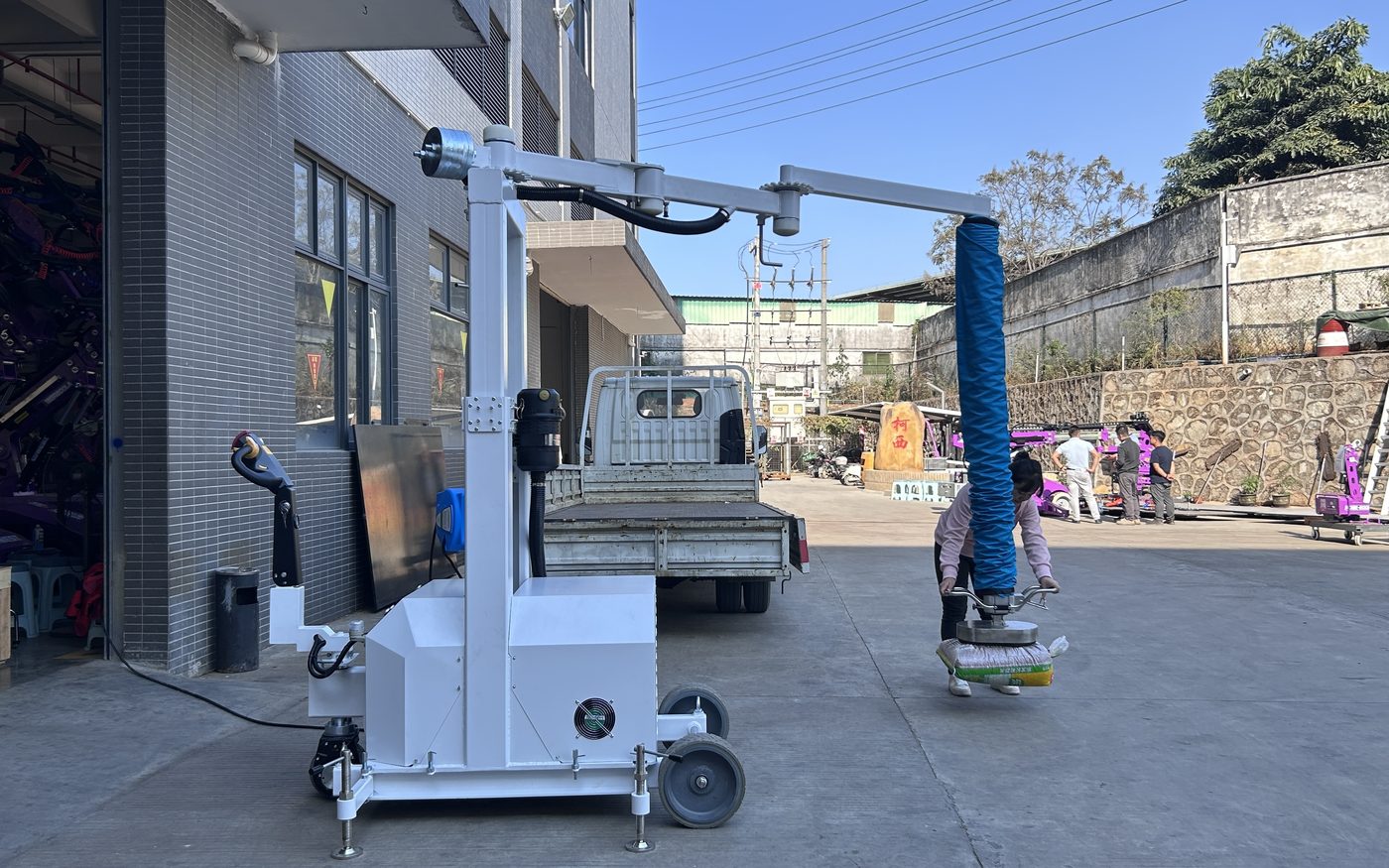
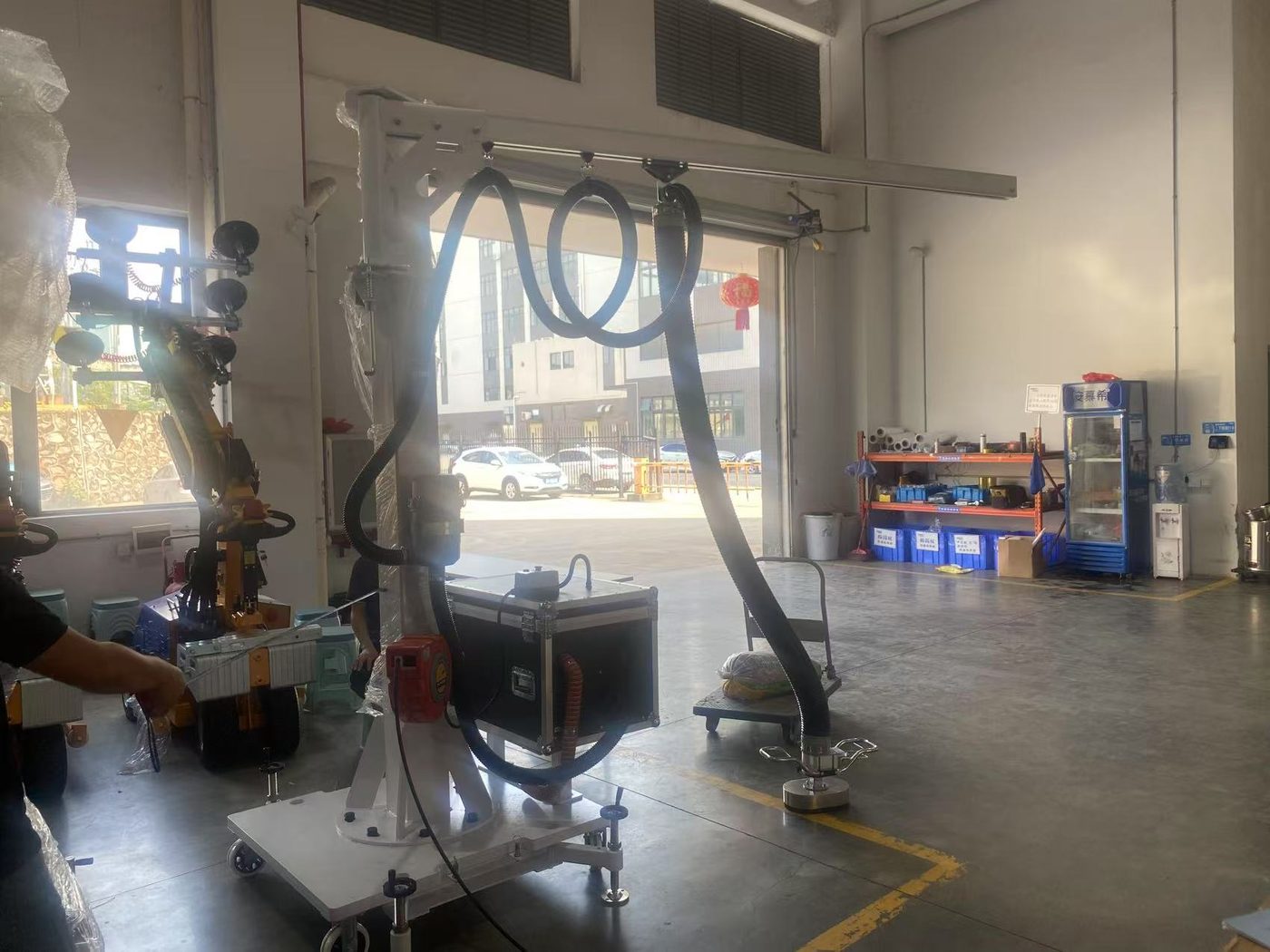
A Cowest mobile vacuum lifter is a complete unit on its own battery-powered column with a 3 m arm, so it goes to the work instead of the work coming to a fixed crane, and nothing is bolted to the floor. Four models are rated 45 or 60 kg: on the MD models the operator pushes the column, and the AD models are self-propelled at 5.5 km/h. They are tube lifters meant for loads such as sacks, cartons and pails; glass and stone lifters are a separate product line. The fixed series are set out under all vacuum tube lifters.
- Four models: MD-ESM, MD-SG, AD-ESM and AD-SKG
- 12 V deep-cycle battery, no mains cable at the station
- Fixed column, or a lifting column for low doorways
- Used inside the building, kept stationary while lifting
The 45 and 60 kg ratings are for airtight loads; plain cartons and paper sacks are tested with your samples, and the pad for each load is confirmed in the quotation.
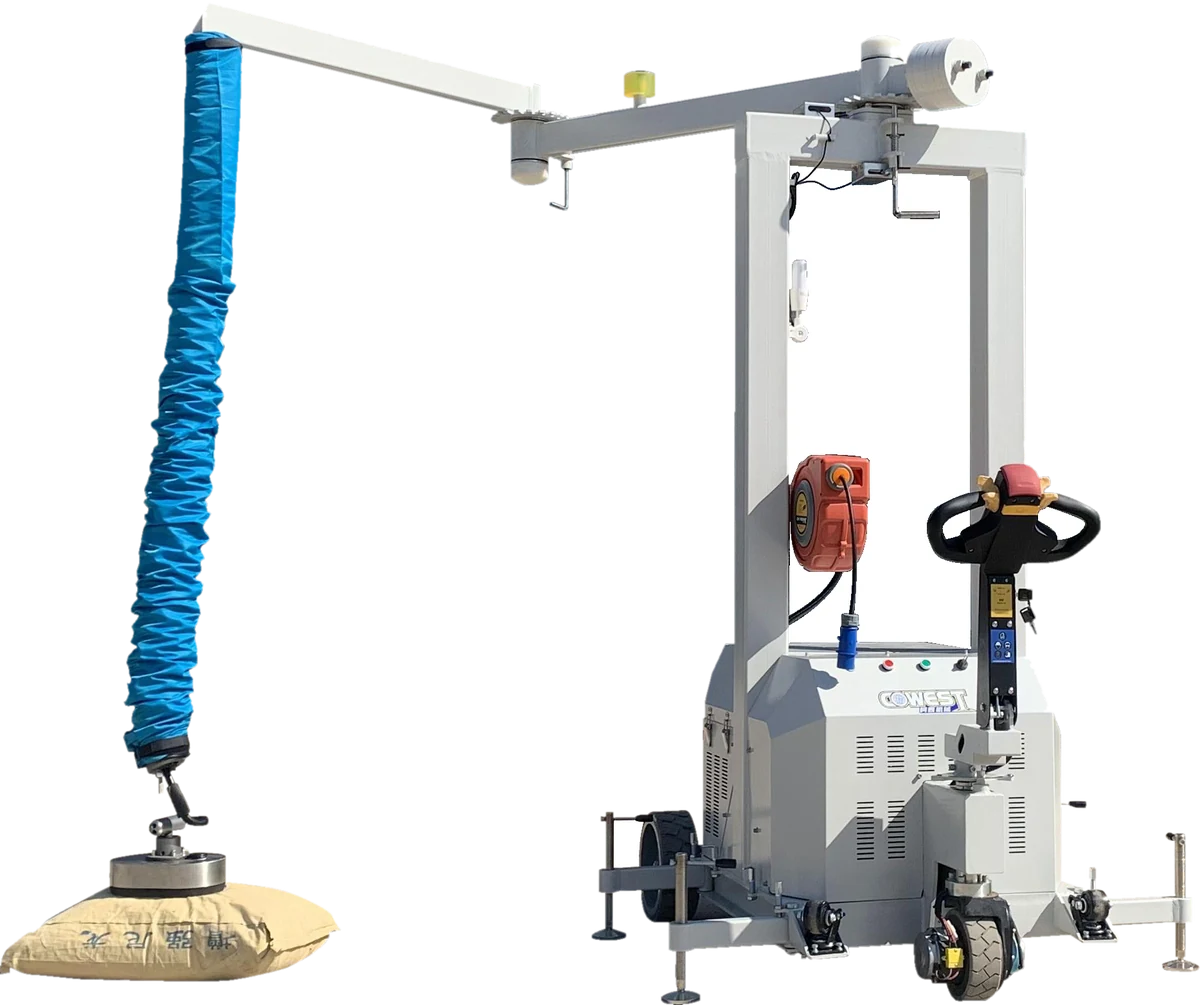
- Rated capacity:
- 45 or 60 kg
- Arm:
- 3 m
- Drive:
- pushed, or 5.5 km/h
- Lifting height:
- 1,700 mm
Use cases
When a mobile unit makes sense
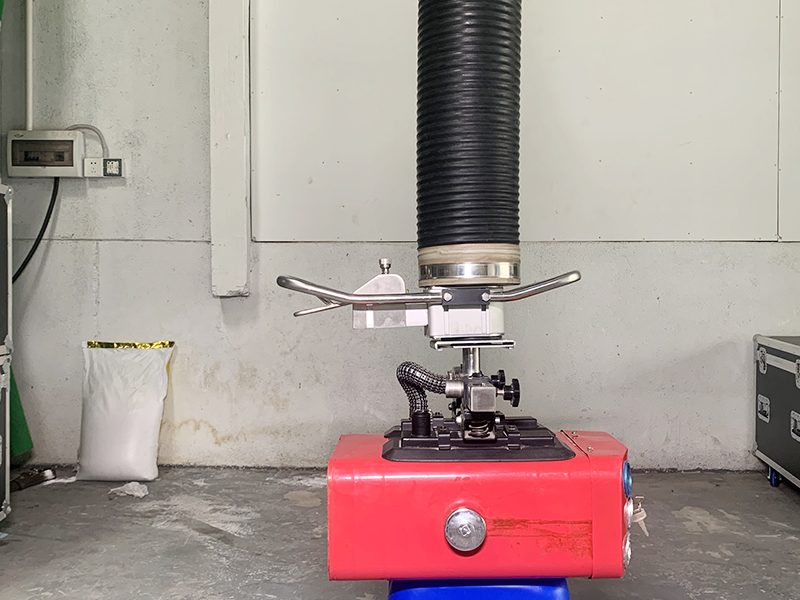
A mobile unit earns its place where fixing a crane is the hurdle: one lifter has to visit places that no single crane or rail covers, the premises cannot be drilled, the floor cannot take a foundation, or the work runs only part of the year.
The price of that freedom is load and reach: 45 or 60 kg on a 3 m arm, while a fixed station takes tube lifters rated up to 200 kg and a WJC pillar jib crane offers arms of up to 4.0 m.
-
Several docks or lines, one lifter
When two or three work areas each need a lifter for part of the shift, one unit can be moved between them instead of a crane being installed at each; if the areas lie along one line, a rail spanning them is the fixed alternative. Picking cartons at more than one dock is the usual case, covered on the picking cartons at several docks page.
-
Rented premises or a thin floor
Where the landlord will not allow drilling, or the slab is too thin for anchor bolts, the industry turns to a base that needs no floor fixing, provided the floor is thick enough and free of cracks. The mobile column is not fixed to the floor at all, yet the floor still has to carry the loaded unit.
-
Seasonal and campaign work
A packing campaign that runs a few months a year does not justify a foundation; the unit works through the season and is parked when it ends.
Specifications
MD and AD models and specifications
Every mobile model is listed with a 1,700 mm lifting height, so check it against the drop from your highest place point down to the pick point, plus about 0.2 m of clearance; the 5-step selection guide walks through that measurement.
| Model | Rated capacity | Drive | Column | Overall height | Arm | Lifting height | Power | Battery |
|---|---|---|---|---|---|---|---|---|
| MD-ESM | 45 kg | Pushed | Fixed or lifting | 2,800 mm fixed; 2,100–2,750 mm lifting | 3 m | 1,700 mm | By model, see note | 12 V deep-cycle |
| MD-SG | 60 kg | Pushed | Fixed or lifting | 2,800 mm fixed; 2,100–2,750 mm lifting | 3 m | 1,700 mm | By model, see note | 12 V deep-cycle |
| AD-ESM | 45 kg | Self-propelled, 5.5 km/h | Fixed or lifting | 2,800 mm fixed; 2,100–2,750 mm lifting | 3 m | 1,700 mm | By model, see note | 12 V deep-cycle |
| AD-SKG | 60 kg | Self-propelled, 5.5 km/h | Fixed or lifting | 2,800 mm fixed; 2,100–2,750 mm lifting | 3 m | 1,700 mm | By model, see note | 12 V deep-cycle |
Power is 2.2–3.0 kW depending on the model; battery type, capacity and running time are confirmed in the quotation.
Request a quote
tell us the load, how many work areas the unit serves, the distance between them and where it can be charged.
| Load | Starting unit | How it works out |
|---|---|---|
| Plain carton up to about 33 kg | A 45 kg unit, MD-ESM or AD-ESM | Carton at 75%: about 34 kg |
| Plain carton up to about 45 kg | A 60 kg unit, MD-SG or AD-SKG | Three quarters of 60 kg is 45 kg, so a carton that heavy goes to a sample test first |
| Film or lined 25 kg sack | A 45 kg unit | PE film counts as airtight, and a lined sack at 75% still leaves about 34 kg; no sack pad is listed for the mobile units, so the pad is confirmed in the quotation |
| 25 kg unlined paper sack | A 60 kg unit | Plain paper is planned at half: 30 kg on 60 kg, but only 22.5 kg on 45 kg, so the 45 kg unit comes in only after a sample test; the pad is confirmed in the quotation |
| Pail or small container | A unit whose rating stays clear of the full weight | The catalogue pairs no pail pad or hook with the mobile units, so whether one fits your pail is confirmed in the quotation |
| Other airtight load | A 45 kg unit while the load stays clear of 45 kg, a 60 kg unit while it stays clear of 60 kg | Heavier airtight loads, and plain cartons over about 45 kg, go to a fixed two-handle ESL-MD on a crane or rail |
Treat each row as the opening proposal: your samples and the route between work areas settle the unit before we quote.
| Mobile unit | WJC pillar jib crane with a tube lifter | |
|---|---|---|
| Load | 45 or 60 kg | The rating of the tube lifter it carries; the 125 or 250 kg crane class is checked against lifter and load together in the proposal |
| Reach | 3 m arm | 2.5–4.0 m arms |
| Floor | No floor installation | Foundation to the factory drawing |
| Place of work | Moves between areas inside the building | One fixed working area |
| Lifting height | 1,700 mm | 1,700 or 2,500 mm (ESL-SG, ESL-MD) |
Pick the mobile unit for flexibility and the fixed crane for heavier loads, longer reach or the taller lifting height.
Features
Pushed or self-propelled
AD, self-propelled: the unit travels under its own power at 5.5 km/h, which suits longer runs between docks or lines inside the building.
Choosing the drive by route
| On your route | Points to | Why |
|---|---|---|
| Short moves between neighbouring stations | MD, pushed | No drive needed for a few metres |
| Long runs between docks or lines | AD, 5.5 km/h | Pushing the unit by hand over a long distance becomes a manual handling task of its own |
| Doorways lower than 2,800 mm | Either drive with the lifting column | It comes down to 2,100 mm, so a doorway close to or below that height is a question for us before ordering |
Whichever drive you choose, the route has to be clear and level, and moving the unit inside your plant follows your model's manual and your own site rules.
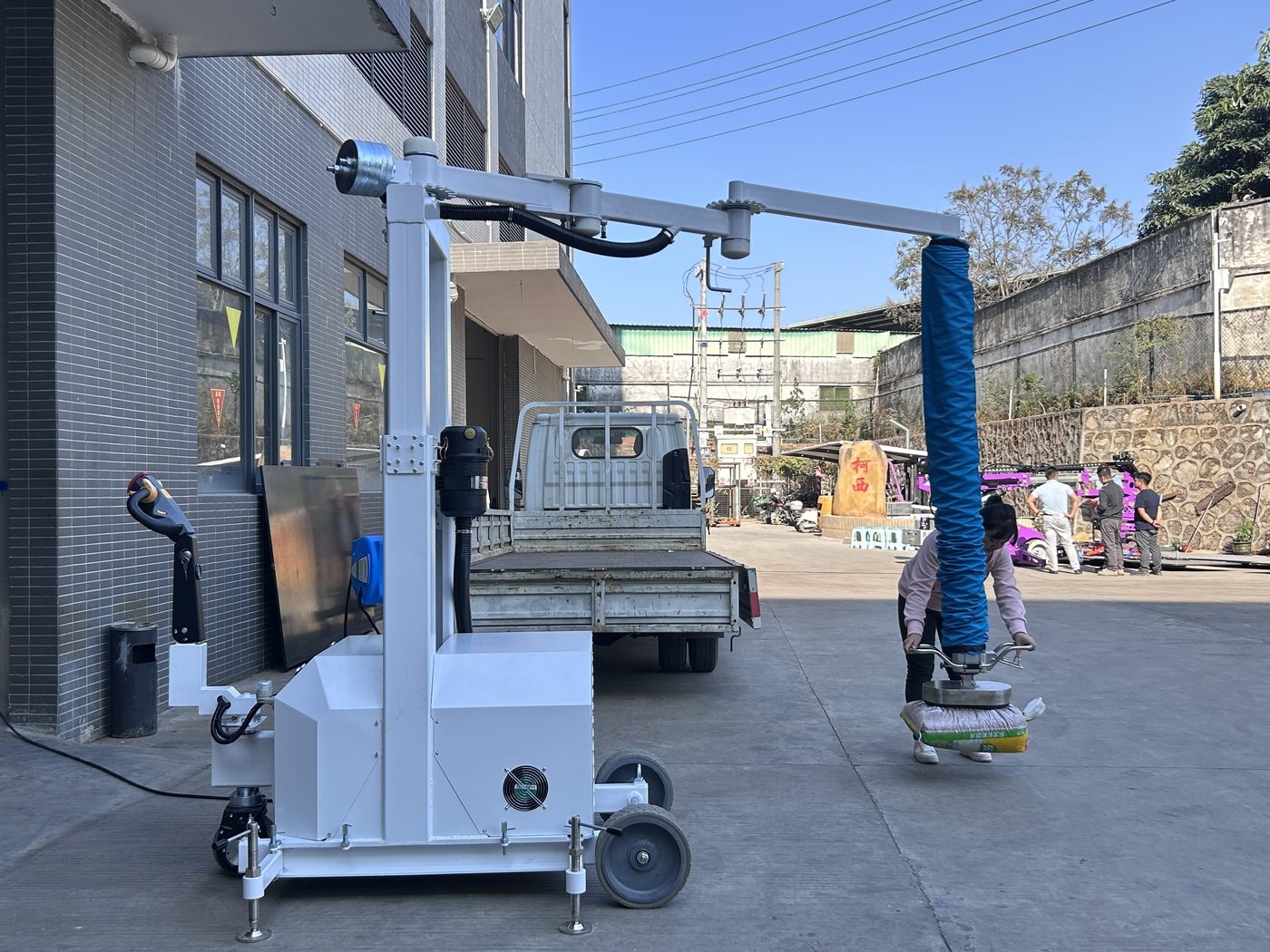
Battery
Battery, charging and shipping
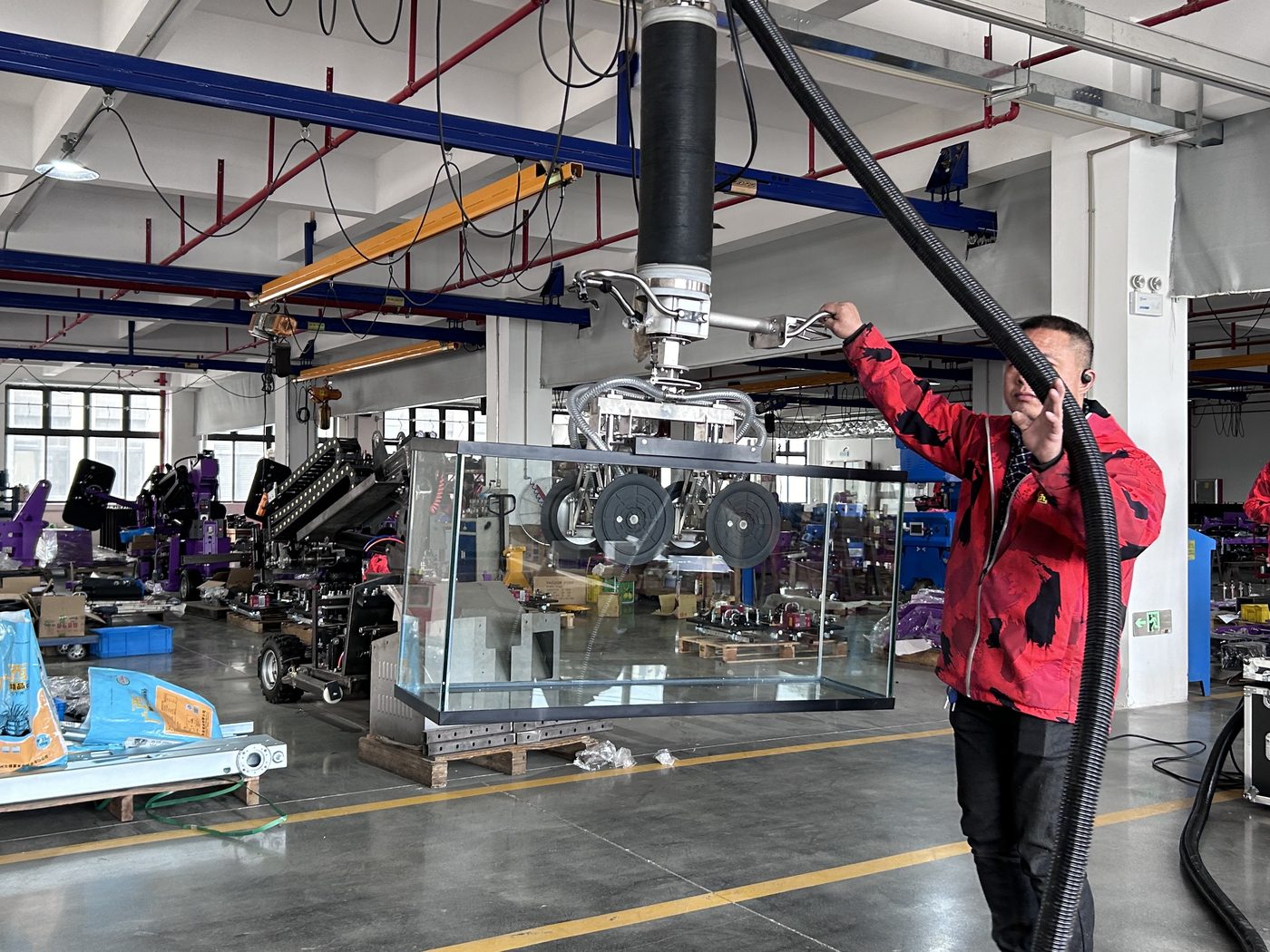
| Your answer | What it decides |
|---|---|
| Shifts per day and lifts per hour | Whether one charge covers the working day |
| Where the unit is parked and charged | The charging point and cable run at that spot |
| Destination country and freight mode | Read together with the battery type, which decides how the battery is shipped |
Working area
Working radius and floor
The 3 m arm sets the working area of the unit; it is placed so that the pick point and the place point both fall inside that area, then kept stationary while lifting.
Floor:
a level, hard floor that carries the loaded unit without ruts, steps or slopes in the working area.
Height:
the fixed column stands 2,800 mm overall; the lifting column adjusts from 2,100 to 2,750 mm, so check doorways and overhead obstacles on the route against it.
Inside only:
the mobile units are for use inside the building; outdoor yards and ramps are a question for us before ordering.
Safety
Safety on a mobile unit
Your model's manual sets the conditions of use, and two of them hold for every mobile unit: it works inside the building, and it stays put while it lifts.
The how a vacuum tube lifter works page explains what happens to a lifted load if the supply fails; on battery power, read your model's manual for that unit's behaviour.
Before each move and each lift
- Route clear and level, doorways checked against the overall height of your column type
- Unit in position and stationary before the first lift
- Load kept low and away from people while it is carried
- Battery charged as the manual for your model sets out
Fit check
When a fixed station fits better
Jobs outside the mobile range, and where they go
-
Case
Loads over 60 kg
Why a mobile unit is not the answer
The mobile range stops at 60 kg
What instead
The two-handle ESL-MD on a crane or rail, up to 200 kg
-
Case
One busy station working all shift, on a floor that takes a foundation
Why a mobile unit is not the answer
Its work never moves, so a pillar jib crane, for slow to medium rates, or a rail, for high ones, serves it from a fixed point
What instead
A fixed single-handle ESL-SG station
-
Case
Stacks that need more than 1,700 mm of lift
Why a mobile unit is not the answer
Every mobile model has 1,700 mm
What instead
ESL-SG or ESL-MD at 2,500 mm
-
Case
Outdoor yards, ramps or classified hazardous zones
Why a mobile unit is not the answer
The units are for use inside the building, and none is explosion-proof
What instead
Ask before ordering; hazardous zones: no unit in our range
Request a quote
For a mobile proposal, the route matters as much as the load: how many work areas the unit serves, how far apart they are, what the floor and doorways are like, and where it can be charged.
- Load: weight range, surface, and a photo of each type
- Route: number of work areas, distance between them, floor, doorways and their height
- Shifts: hours per day, lifts per hour, and the place where the unit is charged
- Heights: pick and place points at each work area
- Site: indoor or outdoor, the altitude, and whether any area on the route is a classified hazardous zone, as with flour, sugar or starch dust
The quotation names the model and drive, the column type, the pad proposed for each load and the commercial terms, and sets out what the factory has confirmed about the battery for your order.
Scope
What the mobile range does not cover
Four models of 45 and 60 kg on a 3 m arm with 1,700 mm of lift, for use inside the building and with no explosion-proof version; heavier or fixed high-rate work goes to the ESL-SG or ESL-MD on a crane or rail.
Cowest Machinery designs and manufactures vacuum tube lifters at its factory in Qingyuan, Guangdong, China; CE marked, with Attestation of Conformity No. CE-1629-01-011123 (CGS Test, valid to 2028) available on request.
Tools
Tools and documents for the mobile range
-
Mobile lifter data sheet (PDF):
ratings, drives, overall heights with each column type and arm length of all four MD and AD units
-
Lift capacity calculator:
with the load weight, its porosity class (semi-porous for cartons and lined sacks, porous for unlined paper) and the site altitude filled in, it works back to the airtight rating needed, to set against 45 and 60 kg
-
NIOSH lifting calculator:
score the manual lifts at each dock the unit would visit
-
Pillar jib crane:
the fixed alternative where the floor can take a foundation
-
Factory and documents:
what is on file about the maker, from the plant to the CE attestation
Mobile lifter questions
Does a mobile unit need a foundation?
No; the column stands on its own base and needs no floor installation.
MD or AD?
MD units are pushed, AD units drive at 5.5 km/h; both come in 45 and 60 kg, so the length of the route decides.
Will it pass under a door?
The fixed column stands 2,800 mm; the lifting column comes down to 2,100 mm for low doorways.
How long does the battery last?
The running time depends on the battery's type and capacity and on how hard the unit works through the shift; the catalogue gives neither the type nor the running time, so both are confirmed in the quotation.
Can it work outdoors or on a ramp?
The units are for use inside the building and are kept stationary while lifting; outdoor or sloped sites are a question for us before ordering.
Is a 60 kg unit enough for 25 kg paper sacks?
On rating, yes as a starting point: planned at half its rating, unlined paper leaves 30 kg on a 60 kg unit; no sack pad is listed for the mobile units, so the pad, and with it the final answer, is confirmed in the quotation after a sample test.