Risk assessment
Manual handling risk assessment: a worked example for a 25 kg sack station, with template
Compiled from public standards and manufacturers' published data.
A manual handling risk assessment is the written check an employer makes of a lifting task before deciding whether to avoid it, change it or equip it; most manual handling rules require one where hazardous lifting cannot be avoided. This page works through one for a station that lifts 25 kg sacks from a pallet onto a conveyor, step by step, using the TILE factors that HSE guidance uses, the HSE filter values and the NIOSH lifting equation, and ends with a template you can download. It is a worked example with example figures, not legal advice, and it does not replace the assessment your own competent person signs. The country limits the assessment is measured against are on manual handling weight limits by country.
What a manual handling risk assessment must cover
The European directive on manual handling and the United Kingdom's 1992 regulations follow the same order: avoid hazardous manual handling, the directive naming mechanical equipment in particular; assess what cannot be avoided; and reduce the remaining risk, in the British wording as far as is reasonably practicable. The directive's annex lists the risk factors the assessment must look at, starting with a load that is too heavy, too large or hard to grasp; the British filter below adds distance from the body, height, frequency, team handling and twisting.
The British guidance adds a filter: close to the body, between knuckle and elbow height, the screening values are 25 kg for men and 16 kg for women, falling to 3 to 10 kg at arm's length or at shoulder and calf height; lifts more frequent than one every 2 minutes, team handling and twisting take the task past the filter into a detailed assessment with the MAC charts. The screening values are not legal limits.
Who and how often: the assessment is the employer's, not the equipment supplier's; some rules say who makes it and when, such as South Africa's ergonomics regulations, which require an assessment by a competent person before the work starts and a review at least every two years.
The station in this example
| Item | Example value |
|---|---|
| Load | 25 kg sacks, firm and well filled, no handles |
| Pick | From a pallet, hands at about 15 cm above the floor |
| Place | On a conveyor at about 90 cm |
| Horizontal distance of the hands, measured from the mid-point between the ankles | About 45 cm |
| Vertical travel | About 75 cm |
| Asymmetry | The load about 30° to the side of straight ahead |
| Frequency and duration | 3 lifts a minute for more than 2 hours of the shift |
| Grip | Fair: no handles, fingers flexed about 90 degrees around the sack |
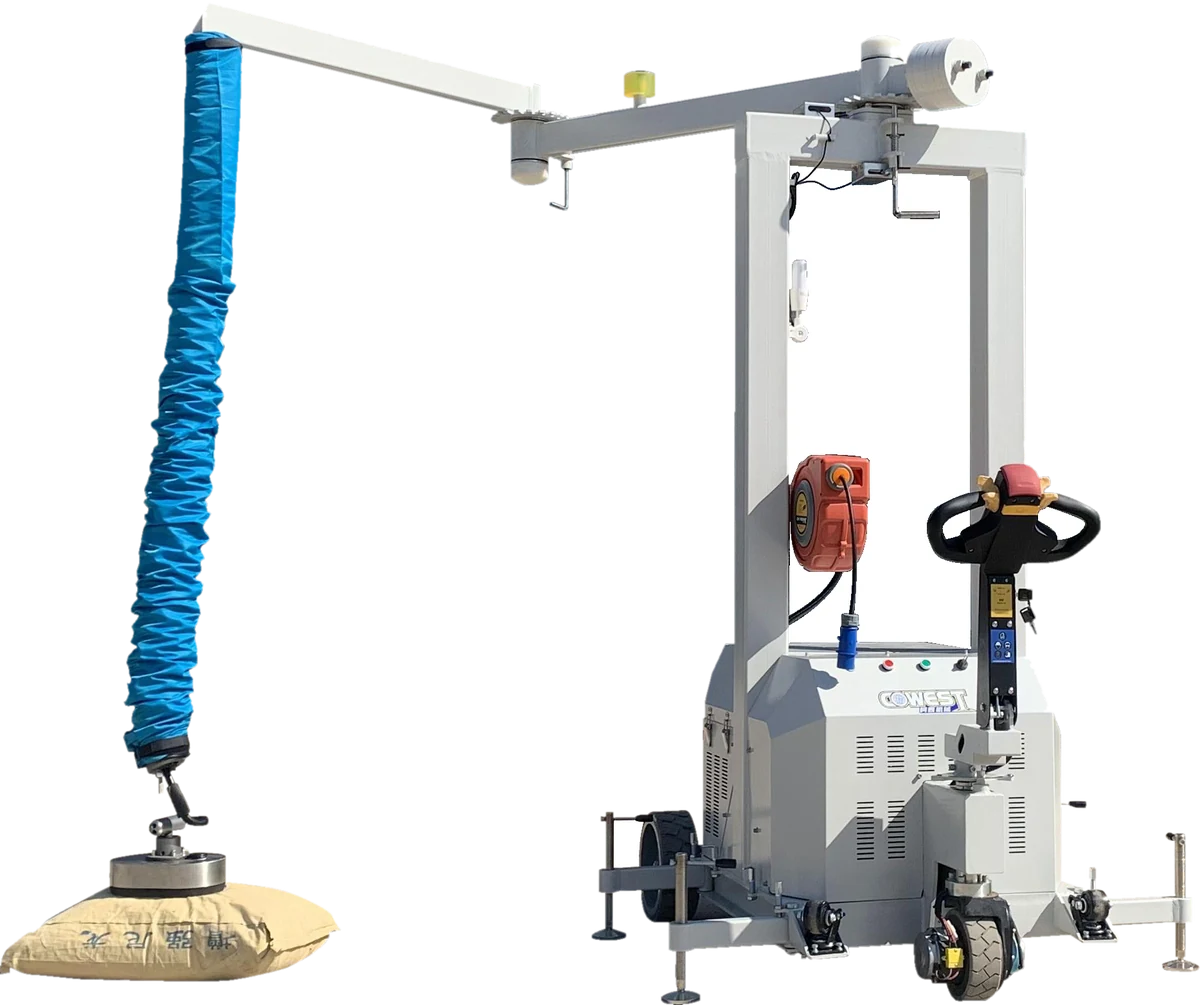
The figures are those of the worked example in our industry knowledge base; your own numbers go into the template in the same places. The station is the kind the vacuum bag lifter page describes.
Working through TILE: task, individual, load, environment
Task: the lift starts low and ends at waist height, the hands are far from the body at the start, the load sits about 30° to one side and the rate is 3 lifts a minute for more than 2 hours; every one of these is a listed risk factor and the rate alone takes the task past the British filter.
Individual: the assessment names who does the task. Pregnant and young workers have separate limits in many countries, from Chile, where pregnant workers may not do manual loading at all, to Germany, where regular lifting above 5 kg without aids is prohibited in pregnancy; a station assessed for a fit adult is not assessed for them.
Load: 25 kg is at the legal or guideline ceiling for a man lifting alone in most markets and above it for a woman. The sack has no handles, so the example scores the grip as fair; if the sack sags in the middle when lifted, the NIOSH manual classes the coupling as poor.
Environment: floor condition, space to turn without twisting, temperature and dust. A flour or sugar station adds a second question, because the dust can make the area a classified explosive atmosphere, which decides what equipment may be installed there.
Scoring the risk: where MAC fits, and the NIOSH equation
The British route is the MAC charts, the detailed tool the guidance points to once the filter is exceeded; this example does not score the MAC charts and uses the NIOSH equation for the number, with the same inputs in the template.
| Factor | Value | Multiplier |
|---|---|---|
| Load constant | 23 kg (51 lb) | — |
| Horizontal distance 45 cm | HM | 0.56 |
| Vertical hand height 15 cm | VM | 0.82 |
| Vertical travel 75 cm | DM | 0.88 |
| Asymmetry angle 30° | AM | 0.90 |
| 3 lifts a minute, more than 2 hours, low start | FM | 0.55 |
| Fair grip, low start | CM | 0.95 |
| Recommended weight limit | 23 × 0.56 × 0.82 × 0.88 × 0.90 × 0.55 × 0.95 | About 4.4 kg |
| Lifting index | 25 ÷ 4.4 | About 5.7 |
A lifting index above 1 means raised risk for part of the workforce; this station sits at roughly 5 to 6 times the recommended limit, an estimate. If the sack sags in the middle, the coupling is poor, the multiplier falls to 0.90 and the index rises to about 6.1. The multipliers come from the 2021 revision of the NIOSH applications manual, whose formulas are the same as the 1994 edition.
Next step: run your own values in the NIOSH lifting calculator.
Control measures and the re-assessment
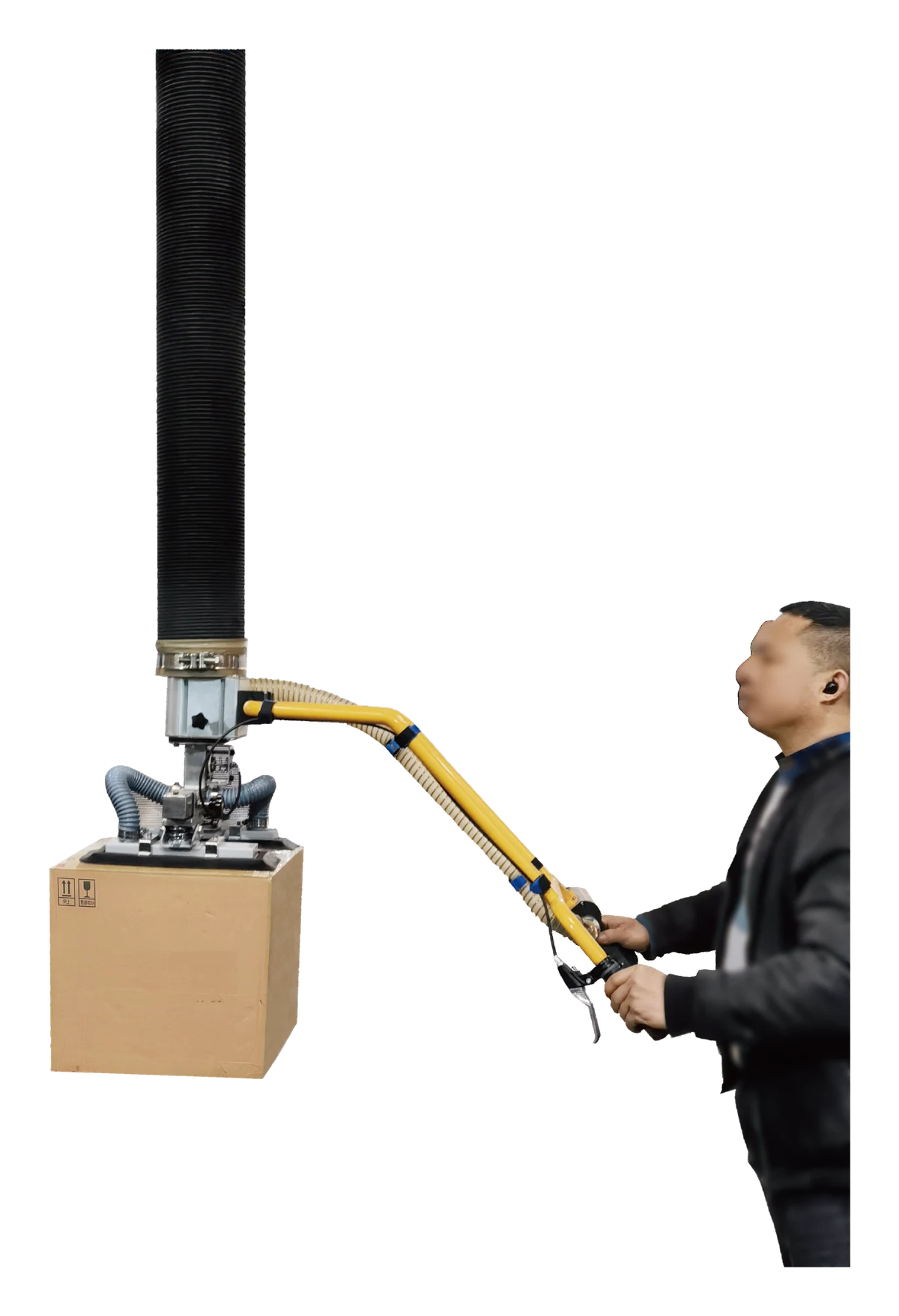
The controls follow the hierarchy of control that rules such as Australia's code of practice and South Africa's ergonomics regulations name. First, avoid the lift: can the sacks reach the conveyor without anyone lifting them by hand, or the pallet be raised so that nobody lifts from 15 cm? Second, a mechanical aid that takes the weight, such as a vacuum tube lifter. Third, organisational measures, including the separate limits for pregnant and young workers. Fourth, training and records.
After a lifter is installed the station is assessed again, because the hazard changes rather than disappears: what remains is steering a load on a tube, placing it, and the lifter's own behaviour, including the controlled descent of the load when the power fails. The re-assessment also records the pad and the load it was sized for, since a porous paper sack is planned at a fraction of the rated capacity and confirmed with a sample test.
The equipment is a control measure, not a certificate: whether the station complies is decided by the employer's own assessment, training and inspections. The wider family of aids is compared on mechanical aids for manual handling.
Download the template
The template is a two-page working document: a station description block, the TILE prompts with space for answers, the British filter check, the NIOSH inputs in the order of the table above, a control measures section following the hierarchy, and a sign-off and review-date line. It carries no legal conclusions and no country limits; those go in from the country page for the market concerned.
Other documents, including model data sheets, are listed on the data sheets and documents page.
FAQ
Can the filled template be handed to an inspector?
It is a working record, and formats differ by country. It records what was assessed, by whom, when, and what was done about the risk; whether it is enough as it stands, or a local form is needed as well, is for your competent person to decide. In Mexico, for example, inspectors expect the employer to show an ergonomic risk analysis and the control measures.
Who signs the assessment?
The employer's competent person, not the equipment supplier. For the lifter, we give the rated capacity of the model and the pad proposed for your load with the quotation; on lifters of this type, a non-return valve closes when the power fails and the load descends slowly and under control.
Does this method work outside the United Kingdom and the United States?
The four TILE factors and the NIOSH equation are not tied to one country, and ISO 11228-1 covers the same ground; the limits and the paperwork are set by each country's own rule, which is why the template leaves the legal lines blank.
send the filled template and we size the lifter from it.
Scope
What this page does not cover
This page is not legal advice and does not carry out the assessment for you; patient and people handling are outside it; the figures are example figures.
Cowest Machinery designs and manufactures vacuum tube lifters at its factory in Qingyuan, Guangdong, China.