Each option covers a different shape: a jib crane serves a sector around its column, a rail serves a line or, laid out as a bridge, a rectangle, and a mobile column serves the working area of its 3 m arm wherever it is parked. Whether we supply the bridge set for a rectangle in your hall is confirmed in the quotation.
Lifting Systems
Lifting systems for vacuum tube lifters
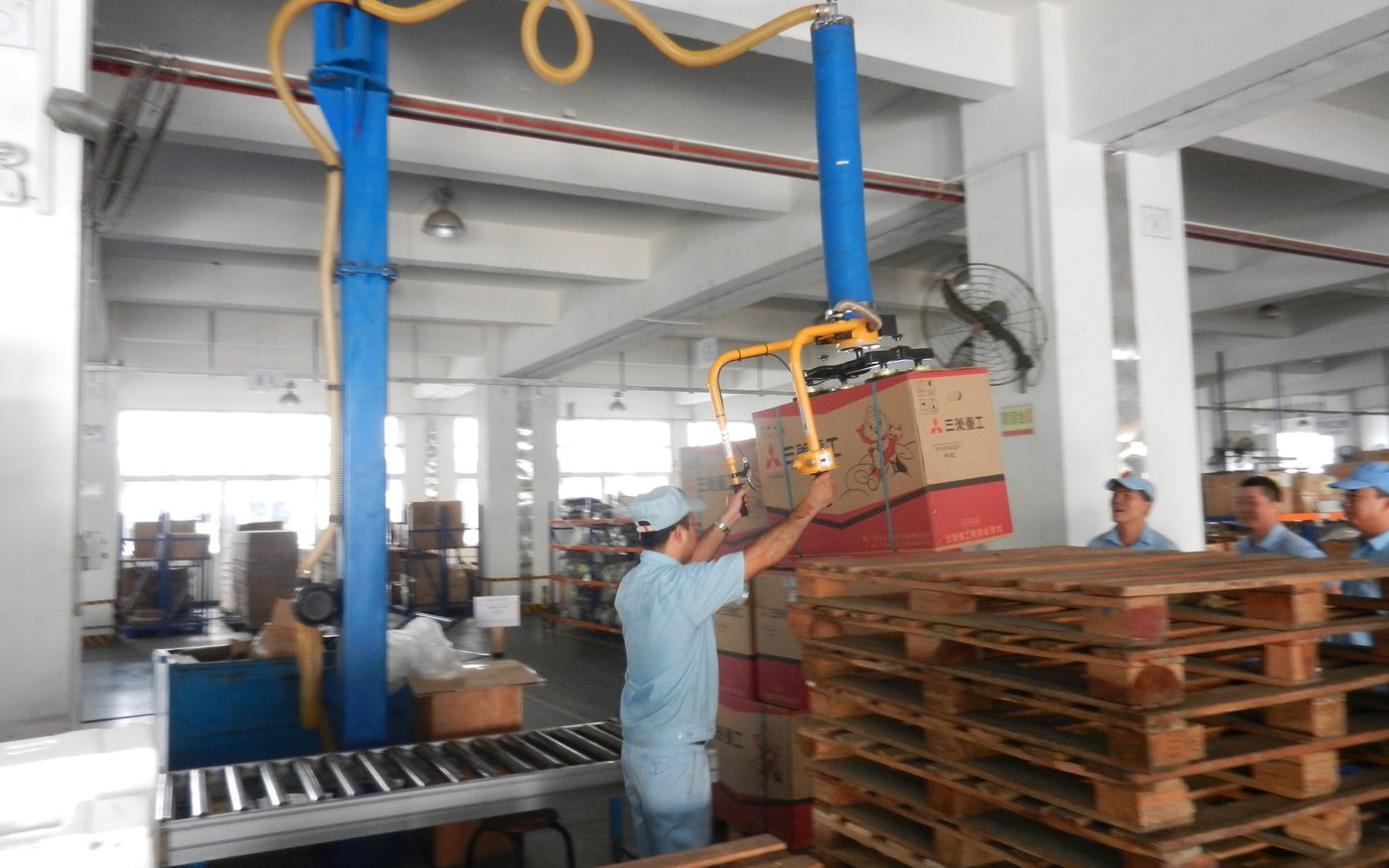
A vacuum tube lifter hangs from a trolley that runs along a jib arm or a rail; the lifter does the vertical work, the crane does the horizontal. Cowest Machinery supplies three of the usual ways to carry one: the WJC pillar jib crane for a fan-shaped area around a column, the AM150 and AM250 aluminium rail systems for lines, and battery-powered mobile columns for work that moves. This page compares them and lists what we need from your site to propose a layout.
- WJC pillar jib cranes in 125 and 250 kg classes
- Aluminium rails AM150 / AM250, 6 m long
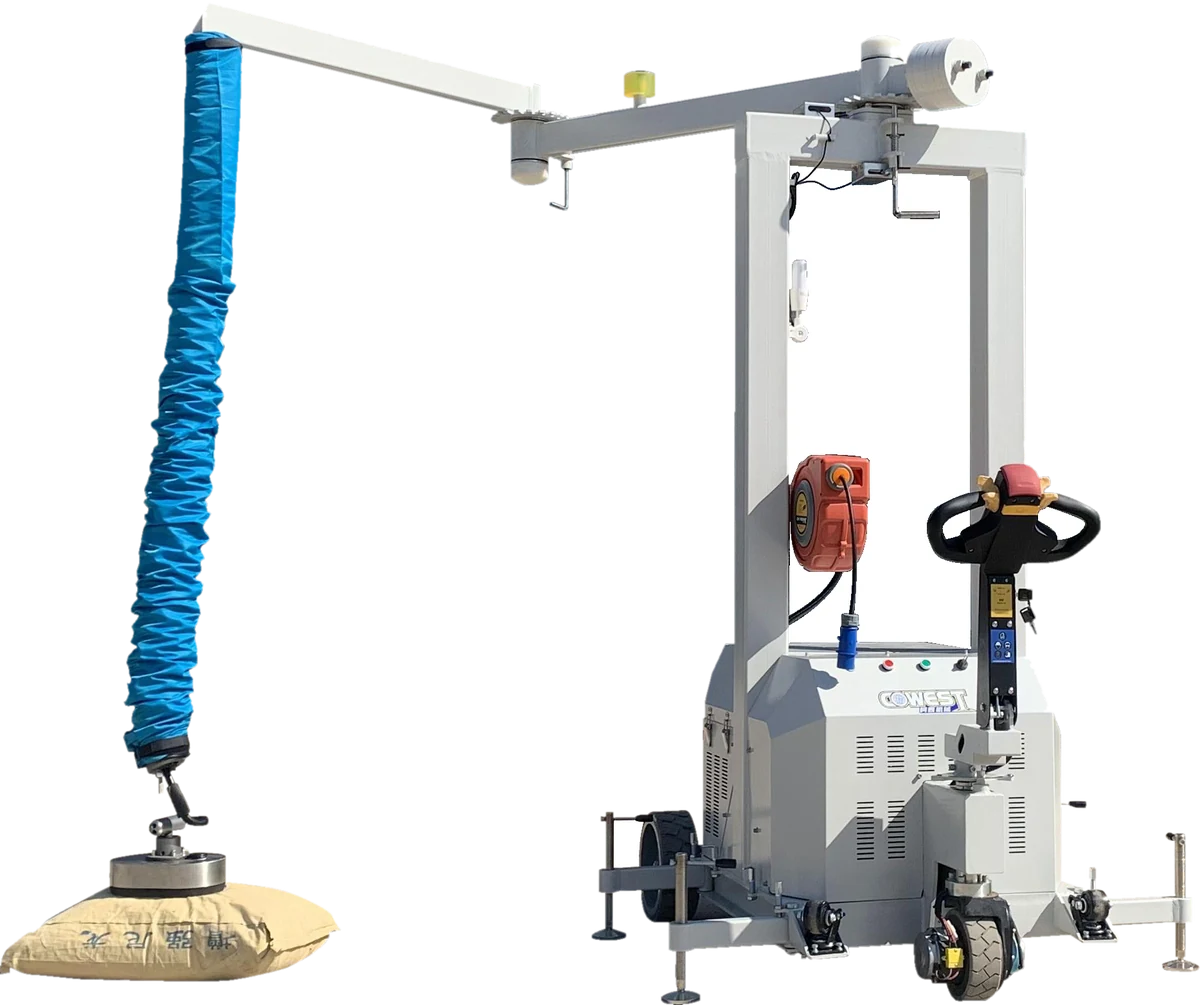
- Battery-powered mobile lifters, 3 m arm
- A layout proposal from your plan, heights and floor
The crane or rail is sized on the lifter's rated load plus its own hanging weight, and checked in the proposal; we do not issue structural calculations for your building.
- Options in our catalogue:
- 3
- Jib crane classes:
- 125 / 250 kg
- Rail profiles:
- AM150 / AM250
- Mobile arm:
- 3 m
Options
Three ways to carry a vacuum tube lifter
Our range: pillar jib cranes WJC in 125 kg and 250 kg classes; aluminium rail systems AM150 and AM250; and mobile units rated 45 or 60 kg. Our catalogue lists the WJC pillar jib crane, the AM150 and AM250 rails and the mobile units; wall-mounted jib cranes and gantry frames are not in it.
| Option | Shape of the work area | Strengths | Limits | Site needs |
|---|---|---|---|---|
| Pillar jib crane | Fan around one column, typically 180°, 270° or 360° | Can stand anywhere on the floor; low investment, less than a rail system | Dead zone next to the column; needs a foundation or a thick enough slab | Concrete foundation or slab to the crane drawing |
| Aluminium rail system, monorail or bridge | Straight line, or a rectangle under a bridge | Large coverage; light and fast to move; several stations can share it | Higher investment than a jib crane; needs roof steel or a support frame | Roof steel or a slab checked by your engineer for the hanging loads; otherwise a free-standing frame supplied locally |
| Mobile column | The area within the 3 m arm around wherever the unit is parked | No floor fixing; can be moved between docks and lines | Load and arm length limited | No floor fixing; the floor along the route is checked in the proposal |
Coverage
Coverage and reach
When the work spreads over several stations or a long line, a rail system covers it better than a chain of jib cranes. Height is the other check: the arm or rail has to sit above the highest place point plus the load, the pad and handle, the retracted lifting tube and the trolley, which is why the clear height under your beams is measured before anything is quoted.
Jib crane
Pillar jib crane WJC
Rail
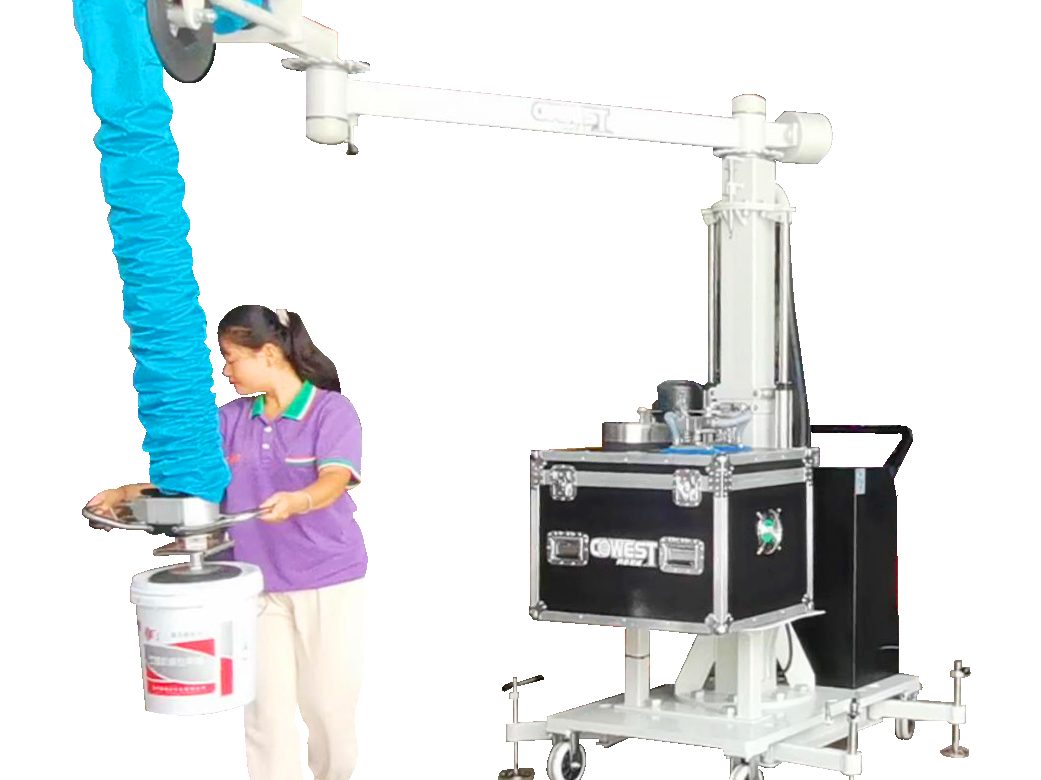
Aluminium rail systems AM150 / AM250
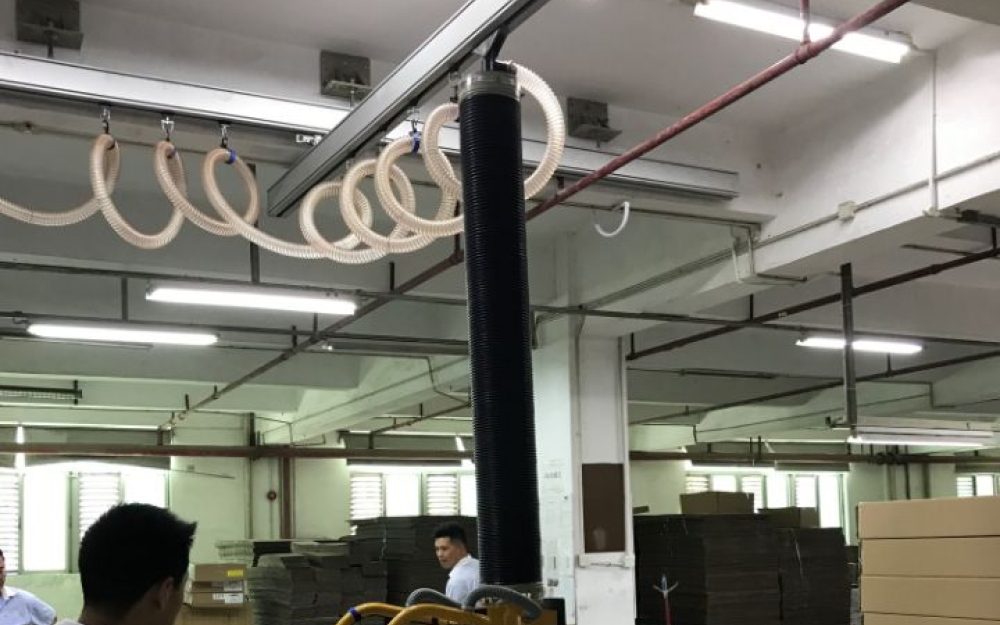
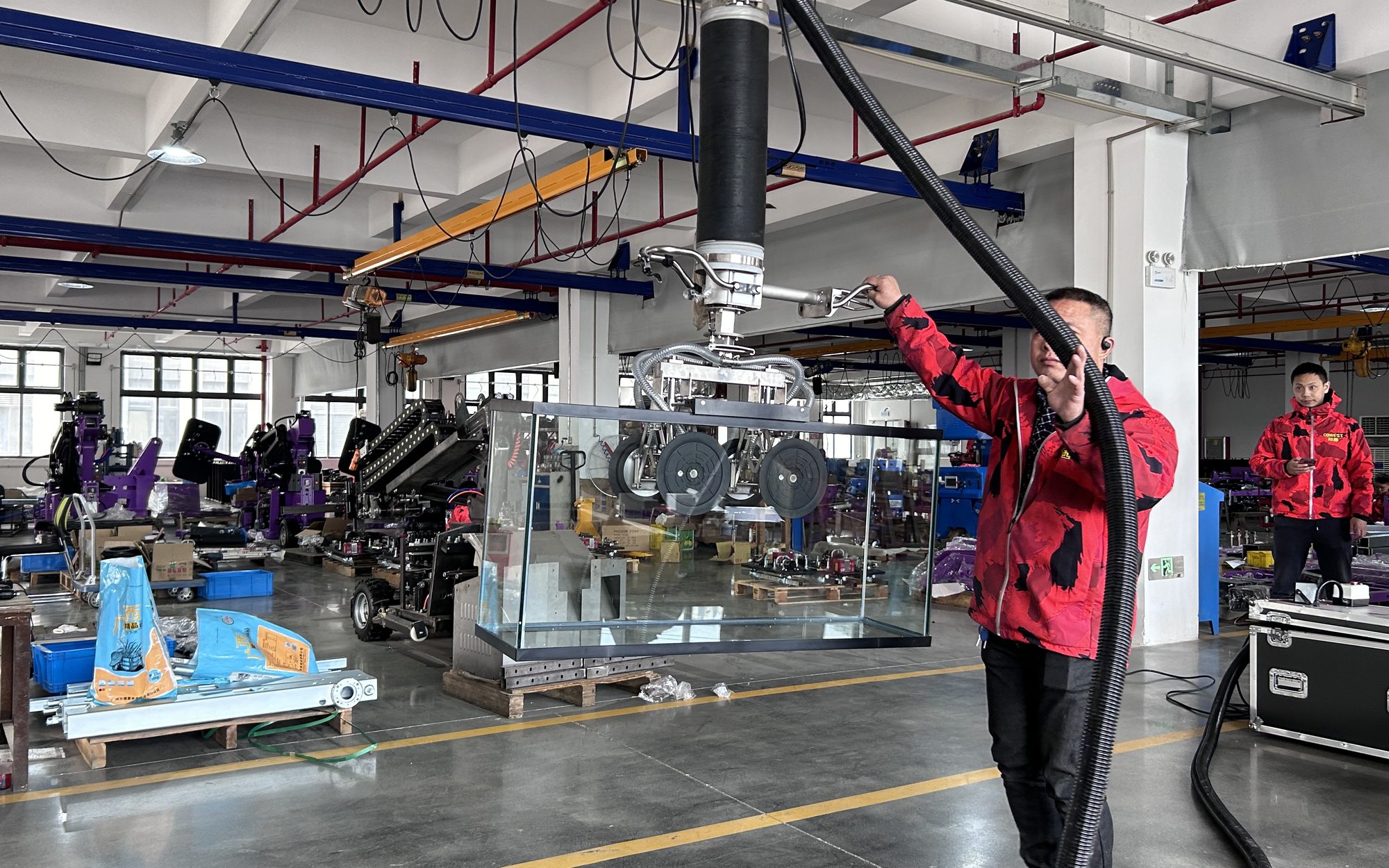
For work along a line, the AM150 and AM250 profiles carry 150 and 250 kg in 6 m lengths; the lifter travels along the rail with little effort, and one run can serve several stations.
Condition: a rail needs something to hang from, either roof steel, a concrete slab or a free-standing frame supplied locally, and your engineer checks that support for the hanging loads before the order. Section sizes, monorail and bridge layouts and the suspension options are on the aluminium rail systems page.
Mobile units
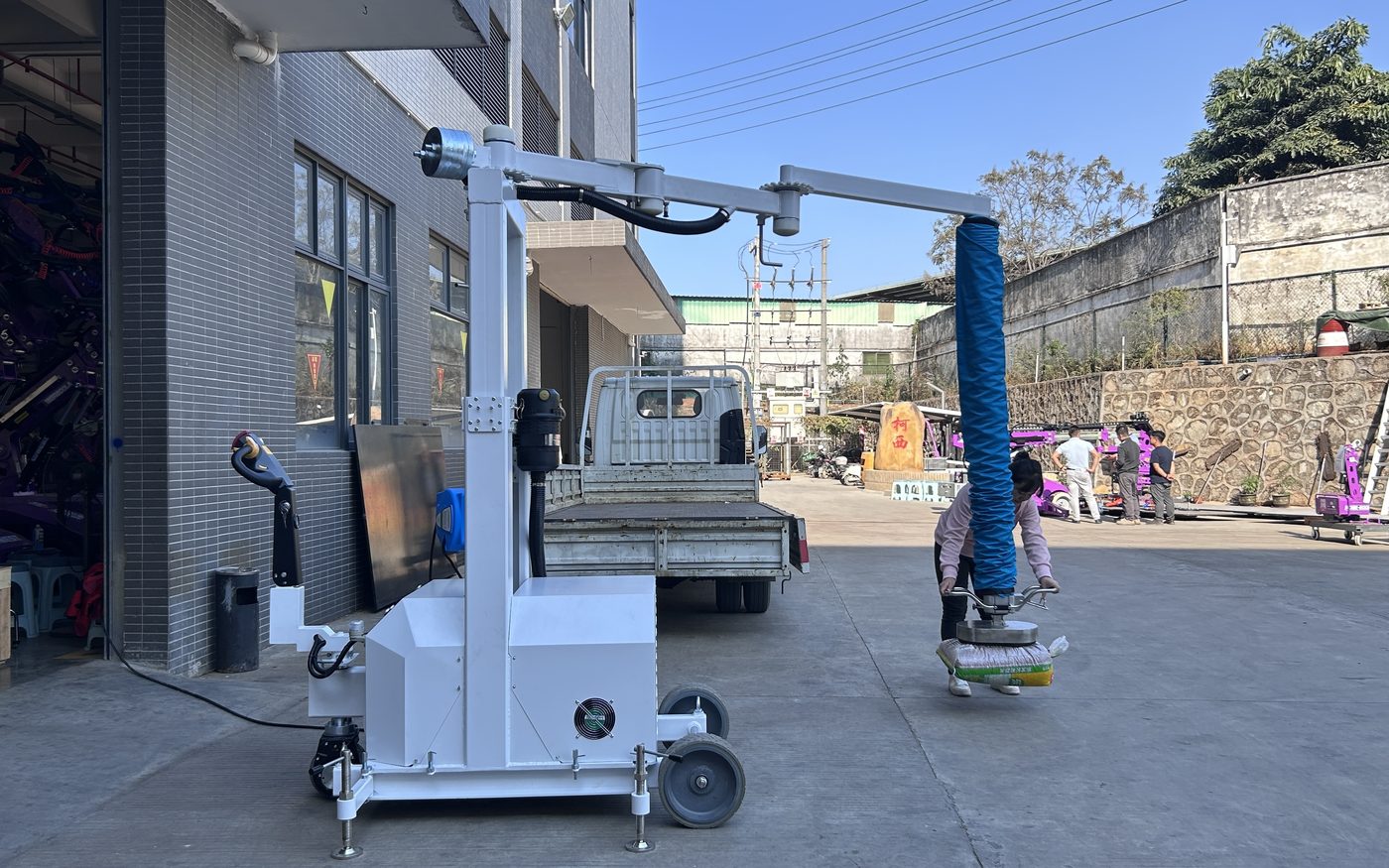
For work that moves, the MD and AD units are complete lifters on a battery-powered column with a 3 m arm, rated 45 or 60 kg, used inside the building and kept stationary while lifting; MD is pushed by hand and AD is self-propelled at 5.5 km/h. They give up load and reach for that freedom, so a fixed station is better served by a jib crane, and a high cycle rate by a rail.
What we need from your site
A layout proposal needs the same facts whichever option you lean towards:
- The load: weight range, dimensions, packaging and surface, lifts per hour and shifts
- Pick and place points: a dimensioned plan, minimum and maximum heights, travel distance, obstacles such as columns, machines and doors
- The building: clear height under beams, lights and sprinklers; slab thickness, concrete grade and reinforcement; joints and cracks; wall material; whether the roof can carry a rail
- Power: voltage, phase and frequency; compressed air available on site
- Environment and rules: indoor or outdoor, temperature, dust, washdown, food contact, hazardous zone, noise limits; destination country and the documents and inspections it requires
- Installation: who installs, site access for the column or rail, photos and video
We size the crane or rail on the lifter's full hanging weight in the proposal, and the building side stays with your engineer: the WJC foundation drawing comes with the order, and we do not issue structural calculations.
Scope
What is not in our standard range
Wall-mounted jib cranes and gantry frames are not in our catalogue, none of the cranes or rails in it is rated above 250 kg, and structural calculations are not part of our supply. Glass and stone vacuum lifters are outside this range.
Cowest Machinery designs and manufactures vacuum tube lifters at its factory in Qingyuan, Guangdong, China, and supplies the jib cranes and rails that carry them.